Georgia yards grow fast, storms hit hard, and a single weekend of serious pruning or clearing can produce more green waste than your curbside bin will take in a month. If you've ever stared at a mountain of branches wondering how you'll ever get rid of it, this guide is for you. Here are your real options in Lawrenceville, from free-but-slow to fast-and-done.
In this guide
- Why Yard Waste Piles Up So Fast
- Option 1: Curbside & County Collection
- Option 2: Mulch or Compost It Yourself
- Option 3: Haul It to a Facility Yourself
- Option 4: Rent a Yard-Waste Dumpster (Best for Big Jobs)
- Keep the Load Clean for Recycling
- How Much Yard Waste Will My Project Produce?
- A Seasonal Yard-Waste Calendar for Gwinnett
- Turning Green Waste Into a Resource
- Storm Debris Season in Georgia
Why Yard Waste Piles Up So Fast
Green waste is deceptively voluminous. A few overgrown shrubs, a cut-back tree line, or a strip of removed sod turns into a pile that dwarfs what you expected. And because most curbside programs limit how much they'll take at once — and how it has to be bagged or bundled — a big project can take weeks to clear through normal collection. For a one-and-done weekend, that timeline just doesn't work.
Option 1: Curbside & County Collection
For small, ongoing yard maintenance, your regular collection is the simplest route. Most services accept bagged leaves and grass and bundled branches within size and quantity limits. It's essentially free with your service, but the trade-offs are real: strict limits per pickup, specific bagging and bundling rules, and a slow pace that can't handle a big one-time job. Check your hauler's or the county's current yard-waste guidelines for specifics. Great for weekly upkeep; frustrating for a major clearing.
Option 2: Mulch or Compost It Yourself
If you're the DIY type and the debris is manageable, turning it into a resource is the greenest option. A chipper turns branches into mulch for your beds; leaves and grass become compost that feeds next year's garden. It's satisfying and free once you have the equipment. The limits are obvious, though — it takes time, effort and space, and it simply won't keep up with large limbs, stumps, sod or a storm's worth of debris.
Option 3: Haul It to a Facility Yourself
You can load up a truck or trailer and haul yard waste to a local transfer station or yard-waste facility. This works for medium jobs if you have the vehicle and the time for multiple trips. Factor in fuel, disposal fees, loading and unloading by hand, and the wear on your vehicle. For a lot of homeowners, the second or third trip is the moment they decide a dumpster would have been easier.
Option 4: Rent a Yard-Waste Dumpster (Best for Big Jobs)
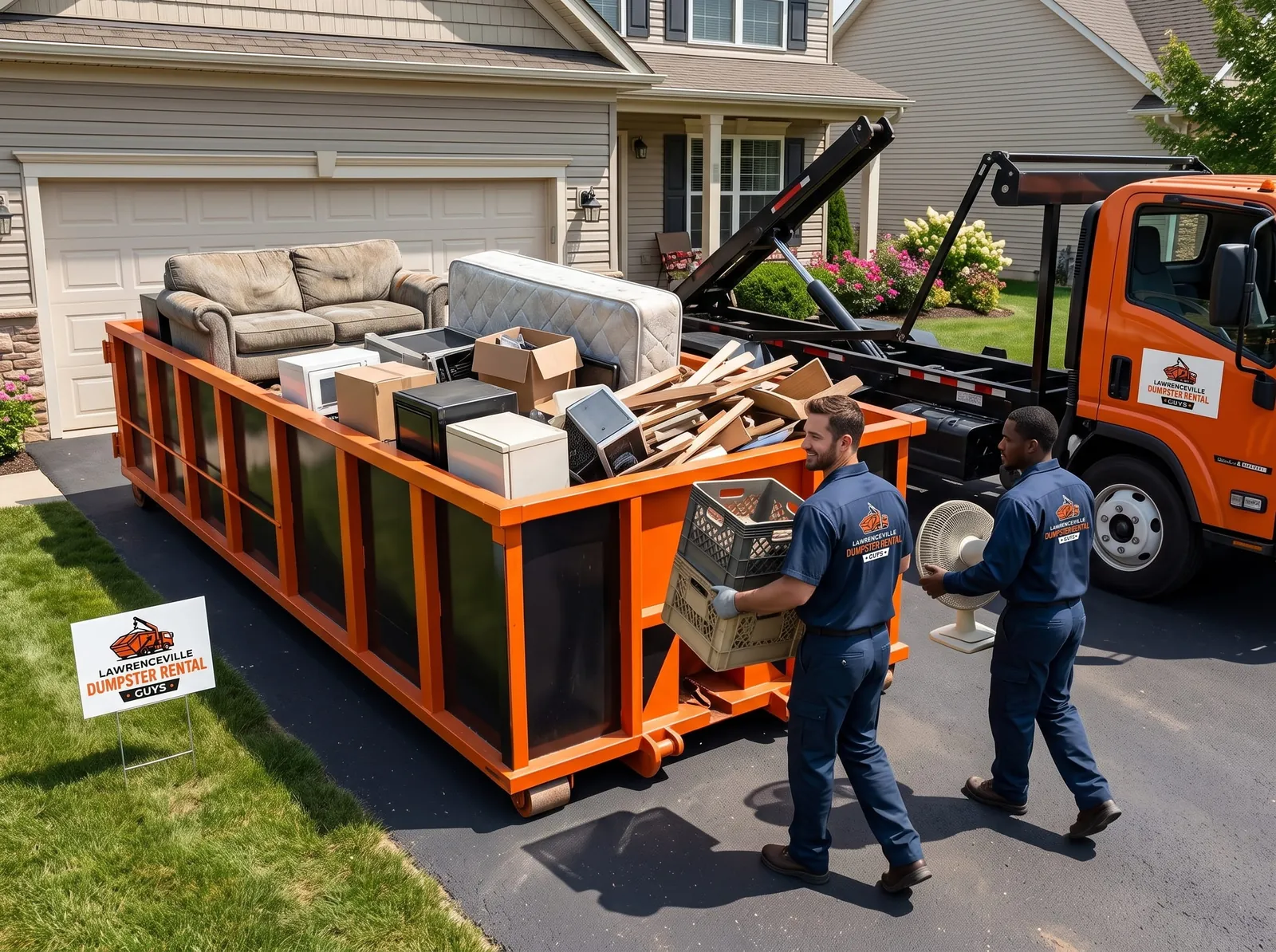
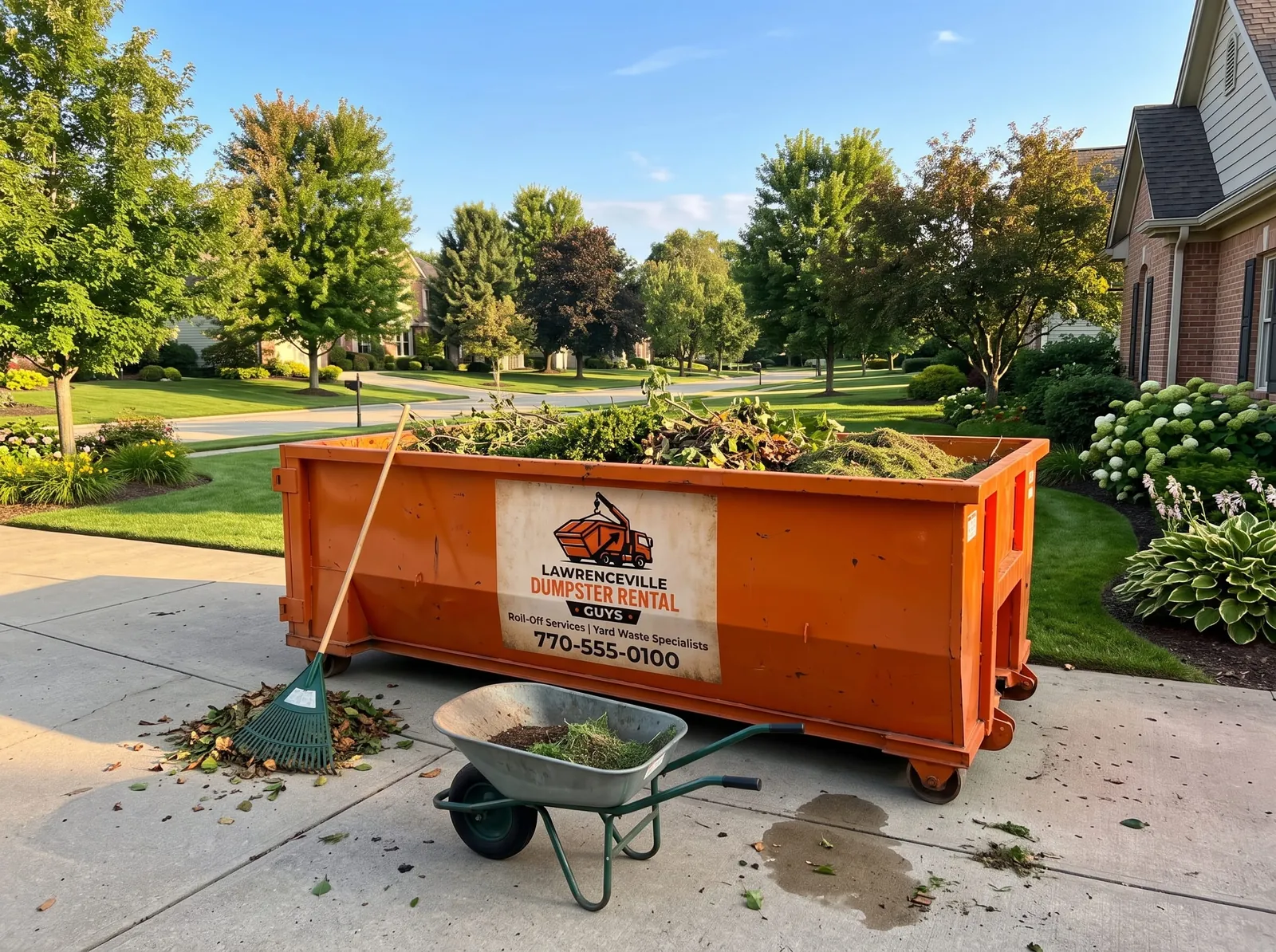
When the project is big — major pruning, clearing overgrowth, removing sod, or cleaning up after a storm — a yard-waste dumpster is the fastest, easiest option by far. We drop a roll-off in your driveway, you fill it on your own schedule with brush, branches, leaves and sod, and we haul it away in one trip, routing the clean green load to be recycled into mulch. No bagging, no bundling limits, no repeated hauls. For most serious outdoor projects, it's the difference between a month of hassle and a finished weekend.
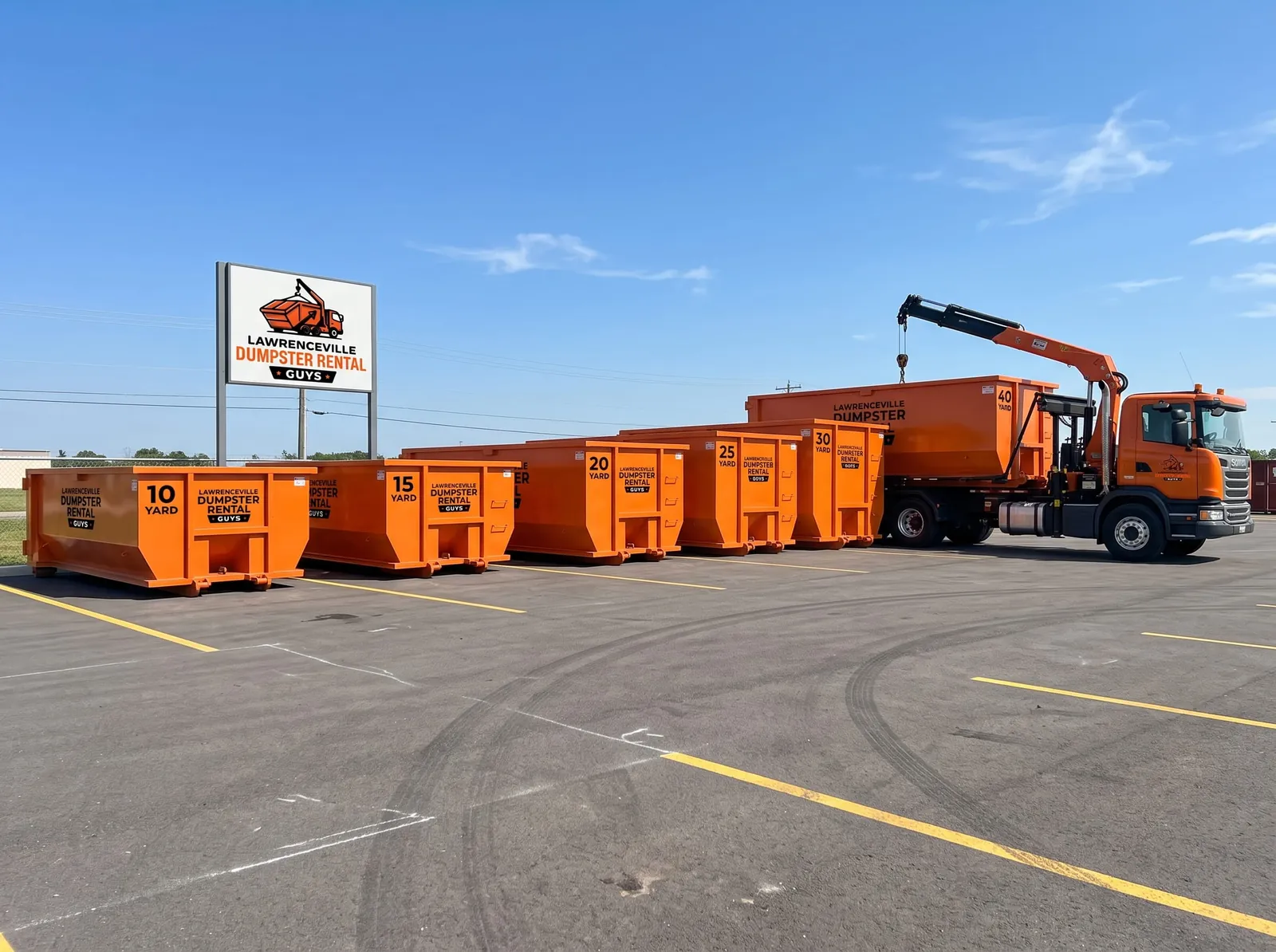
Because green waste is bulky but light, a 10 or 15-yard container holds a lot at a fair price. Just watch the heavy stuff — see below.
Keep the Load Clean for Recycling
To keep your yard waste on the path to becoming mulch instead of landfill, keep the container all-green: branches, brush, leaves, grass, shrubs and sod. Mixing in bagged trash, treated or painted lumber, or construction debris changes how the whole load has to be disposed of. If you've got both yard waste and general junk, it's usually best to keep them separate — and we can advise on the right setup when you book.
How Much Yard Waste Will My Project Produce?
Green waste volume is genuinely hard to eyeball, because a pile of loose branches is mostly air until it's cut and packed. Some rough guides from local projects:
- A weekend of pruning and a few shrubs: often fits a 10-yard.
- Clearing a fence line or heavy overgrowth: typically a 15-yard.
- Removing sod from a lawn or big storm cleanup: a 20-yard, with weight in mind if there's soil.
Cutting branches into shorter lengths and stacking rather than tossing them can dramatically increase how much fits — sometimes enough to drop a size.
A Seasonal Yard-Waste Calendar for Gwinnett
Green waste in our area follows the seasons, and planning around them helps:
Spring: the big growth push — pruning, bed cleanup, and clearing winter dieback. A busy time for cleanups.
Summer: fast growth and thunderstorm damage. Storm limbs can appear overnight.
Fall: the leaf avalanche, plus end-of-season cutbacks. Volume peaks for many yards.
Winter: the ideal window for major tree work and clearing projects, when plants are dormant and yards are accessible. Often the smartest time to tackle a big overhaul.
Turning Green Waste Into a Resource
One of the quiet satisfactions of yard waste is that, handled right, almost none of it is really 'waste.' Clean green loads we haul are routed to be turned into mulch and compost that goes back into Georgia's landscapes. On the DIY side, chipping branches for bed mulch and composting leaves and clippings closes the loop in your own yard. Even if you rent a container for the bulk of a big job, setting aside some material to compost is a small win for your garden and for Gwinnett. It's the same responsible-disposal thinking we bring to every load.
Storm Debris Season in Georgia
Between summer thunderstorms and the occasional tropical system pushing inland, Georgia yards take a beating. After severe weather, downed limbs and debris can overwhelm any curbside program for weeks. Storm cleanup is one of our busiest and most important services — if a storm has left you with a yard full of limbs, call us as soon as you can and we'll prioritize getting a container to you, often same-day or next-day. Clearing debris promptly also reduces hazards and helps your property recover faster.