An estate cleanout is rarely just a cleanout. It's a family navigating grief, logistics and a house full of memories all at once. There's no perfect way to do it, but there is a kinder, more manageable way. This guide walks through the process step by step — practical where you need practicality, gentle where you need grace.
In this guide
- Start With Grace: Give Yourself Time
- Step 1: Secure Documents, Valuables & Essentials First
- Step 2: Sort Into Keep, Donate, Sell, and Toss
- Step 3: Handle the Sentimental Items With Care
- Step 4: Donate and Resell Locally
- Step 5: A Dumpster for Everything That's Left
- Working With Family (and Reducing Friction)
- Creating a Realistic Timeline for the Cleanout
- Handling Difficult Discoveries & Hazardous Items
- Taking Care of Yourself Through the Process
- When to Call for Help
Start With Grace: Give Yourself Time
Before the first box is packed, give yourself permission to go at a human pace. Unless a hard deadline forces it — a closing date, a lease, an out-of-town timeline — you don't have to do this in a single exhausting push. Break it into sessions. Take breaks when a room gets heavy. Bring help, whether family, friends or a professional. The goal isn't speed; it's getting through it without burning out or making decisions you'll regret. Be patient with yourself and everyone helping.
Step 1: Secure Documents, Valuables & Essentials First
Before any sorting or tossing begins, do a careful first pass for the things that must not be lost. Look for: wills, deeds, titles, insurance policies, financial and tax records, and safe-deposit keys; cash, jewelry, watches and precious metals; family photos and irreplaceable heirlooms; medications to be disposed of properly; and anything with account numbers or personal information. Gather these into a secure, clearly marked place before the wider cleanout starts. It's heartbreaking to realize something important went out with the general debris — this first pass prevents it.
Step 2: Sort Into Keep, Donate, Sell, and Toss
With valuables secured, work room by room and sort everything into four simple categories. A physical system helps — colored tape, labeled zones, or four corners of a room:
- Keep: items family members want or need. Decide who takes what to avoid later friction.
- Donate: usable clothing, furniture, housewares and books that can help someone else.
- Sell: items with real resale value, for an estate sale, consignment or online listing.
- Toss: everything broken, worn out, expired or simply unwanted.
Working one room at a time keeps a huge job from feeling infinite. Finish a room, then rest before the next.
Step 3: Handle the Sentimental Items With Care
This is the hardest part, and it's where cleanouts stall. You cannot keep everything, but you also don't have to decide everything at once. A few strategies help: photograph items you can't keep but want to remember; choose a small, meaningful selection rather than whole categories; and set aside a single 'decide later' box per person so you're not forced into snap decisions on emotionally loaded objects. Let family members claim what matters to them. Memories live in you, not in the object — but there's no shame in keeping a few things that carry them.
Step 4: Donate and Resell Locally
Giving usable items a second life feels far better than discarding them, and it lightens the final haul. Around Lawrenceville and Gwinnett County, local charities, thrift stores and donation centers accept clothing, furniture and household goods, and many offer pickup for larger items. For pieces with real value, an estate-sale company or consignment shop can turn them into funds for the family. Handle this step before you toss, so genuinely useful things go to good homes rather than the dumpster.
Step 5: A Dumpster for Everything That's Left
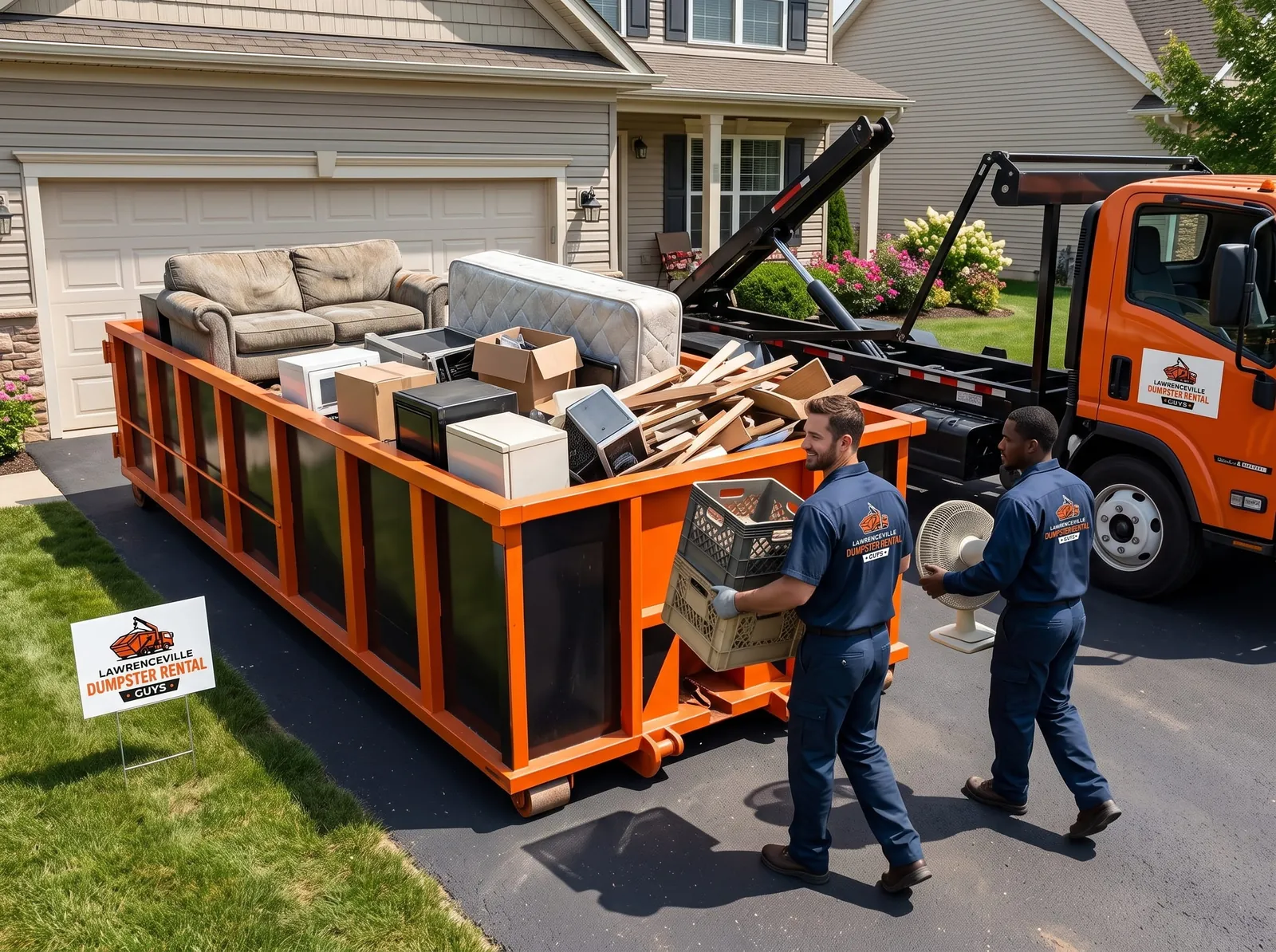
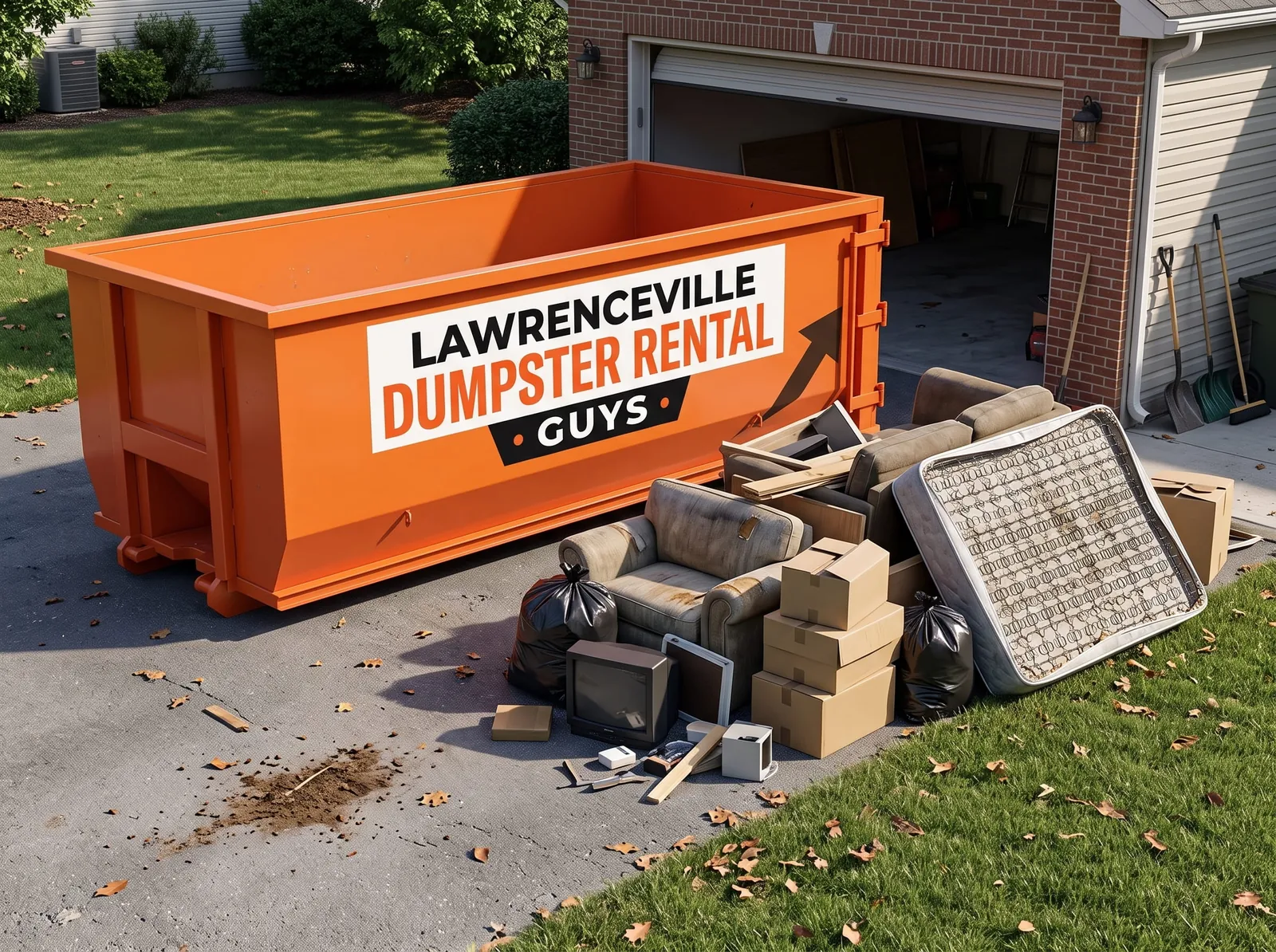
After keep, donate and sell, what remains is often still a lot — and this is where a cleanout dumpster does the heavy lifting. Rather than making dozens of trips to the transfer station during an already exhausting time, we drop a roll-off in the driveway and you load it at your own pace. When you're done, one call and it's gone.
For a full-home estate cleanout, a 20-yard is the usual fit; a very full or larger home may call for a 30-yard or a swap. Household goods are bulky but light, so volume matters more than weight here. And if lifting the heavy furniture is more than you or your family can manage, ask about our full-service option — our team can do the loading for you.
Working With Family (and Reducing Friction)
Cleanouts can strain relationships as much as they tax the body. A little structure helps everyone: agree early on how shared items and any sale proceeds will be handled; give each person a clear role; and keep communication open, especially with family who can't be there in person. When emotions run high, step back to the shared goal — honoring the person by handling their home with care. It's okay for it to be imperfect. You're doing a hard thing, together.
Creating a Realistic Timeline for the Cleanout
One of the kindest things you can do for yourself is to plan the cleanout in stages rather than as a single marathon. A workable rhythm for many families looks like this: first, the valuables-and-documents pass (a day or an afternoon); then room-by-room sorting into keep, donate, sell and toss (spread across several sessions); then donation drop-offs and any estate sale; and finally the dumpster for what's left, loaded at your own pace. If you're facing a hard deadline like a closing or lease end, work backward from that date and build in more cushion than you think you'll need — these projects almost always take longer than expected, and that's completely normal.
Handling Difficult Discoveries & Hazardous Items
Old homes hold surprises, and a cleanout often surfaces things that need special care. You may find expired medications (take them to a pharmacy take-back rather than the trash), firearms or ammunition (handle per law and safety, and involve the right people), old chemicals, paint and solvents in the garage (household hazardous waste, not the dumpster), and important paperwork mixed in with junk. Go slowly enough that nothing valuable or sensitive gets swept up in the general debris. Anything hazardous should be set aside for proper disposal — our accepted-items guide covers where these things should go.
Taking Care of Yourself Through the Process
This is worth saying plainly: an estate cleanout is emotional labor as much as physical labor, and it's okay to find it hard. Take breaks when a room brings up a lot. Don't do the whole thing alone if you can help it — company makes the sentimental parts lighter. Eat, hydrate and rest; grief and exhaustion compound each other. And give yourself grace on the decisions. You will not sort every object perfectly, and you don't need to. Honoring someone by carefully clearing their home is a meaningful act, even when it's painful. Be as gentle with yourself as you're being with their belongings.
When to Call for Help
You don't have to carry all of it. If the timeline is tight, the home is large, or the emotional weight is simply too much to add physical labor on top of, lean on help — family, friends, professional organizers, estate-sale companies, and a dumpster service that understands what this job really is. We've helped many Gwinnett families through estate and after-loss cleanouts, and we approach every one with patience, discretion and respect for what you're going through. When you're ready, give us a call and we'll make our part of it as easy as we possibly can.