It's the single most common question we get, and it's a good one: what size dumpster do I actually need? Order too small and you're paying for a second delivery halfway through the job. Order too big and you're paying for space you'll never fill. After sizing thousands of projects across Lawrenceville and Gwinnett County, we've learned that getting it right comes down to two simple questions — and this guide walks you through both.
In this guide
- The Two Questions That Actually Decide Your Size
- The Five Sizes at a Glance
- Sizing by Project Type
- The Heavy-Debris Exception You Can't Ignore
- Three Sizing Mistakes That Cost Real Money
- How to Estimate Volume Without a Math Degree
- Local Considerations for Lawrenceville & Gwinnett Homes
- How We Size It For You in Two Minutes
The Two Questions That Actually Decide Your Size
Forget the marketing charts for a second. Every correct sizing decision hinges on just two variables: how much debris you have (volume) and how heavy it is (weight). Most people only think about the first one, and that's exactly how projects go sideways.
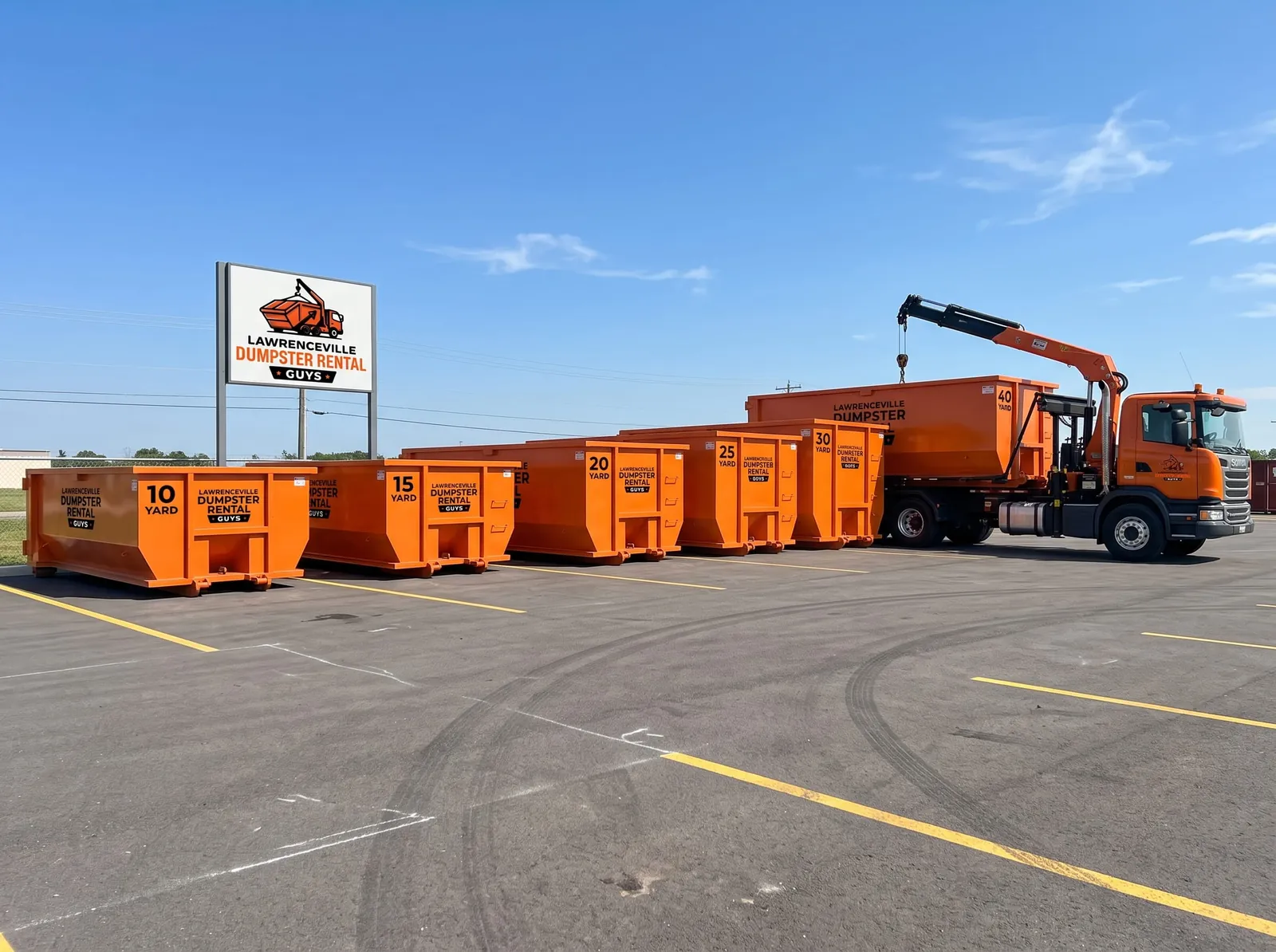
Volume is measured in cubic yards — that's what the 10, 15, 20, 30 and 40 refer to. A cubic yard is a cube three feet on each side, roughly the amount of debris that fills the bed of a standard pickup truck. So a 20-yard dumpster holds about six pickup loads.
Weight is the sneaky one. Every rental includes a set weight allowance (measured in tons), and going over it triggers an overage charge. Dense material — concrete, dirt, brick, tile, roofing shingles — gets heavy long before it fills a container. That's why a box full of concrete needs to be a small box, even though your instinct says to grab a big one.
Rule of thumb: size up for bulky, light debris (furniture, framing, brush). Size down for dense, heavy debris (concrete, dirt, shingles).
The Five Sizes at a Glance
Here's the quick reference. Think of this as your starting point, then read the project-specific guidance below to fine-tune.
| Size | Holds About | Great For |
|---|---|---|
| 10 Yard | 3 pickup loads | Small, heavy jobs; single rooms; concrete |
| 15 Yard | 4–5 pickup loads | Flooring, medium cleanouts, decks |
| 20 Yard | 6 pickup loads | The all-rounder: remodels, roofing, cleanouts |
| 30 Yard | 9 pickup loads | Big renovations, additions, new builds |
| 40 Yard | 12 pickup loads | Commercial jobs, major demolition |
Sizing by Project Type
This is where the rubber meets the road. Below are the projects we size most often for Gwinnett homeowners, with the size that usually fits.
Single-room remodel (bathroom, small kitchen): A 10-yard is usually plenty. Bathroom demo produces surprisingly heavy debris — old tile, a cast-iron tub, plaster — so the smaller box keeps you under the weight limit while still holding the volume.
Large kitchen or whole-floor remodel: Step up to a 20-yard. Cabinets, drywall, flooring and fixtures add up fast once you're gutting a whole space.
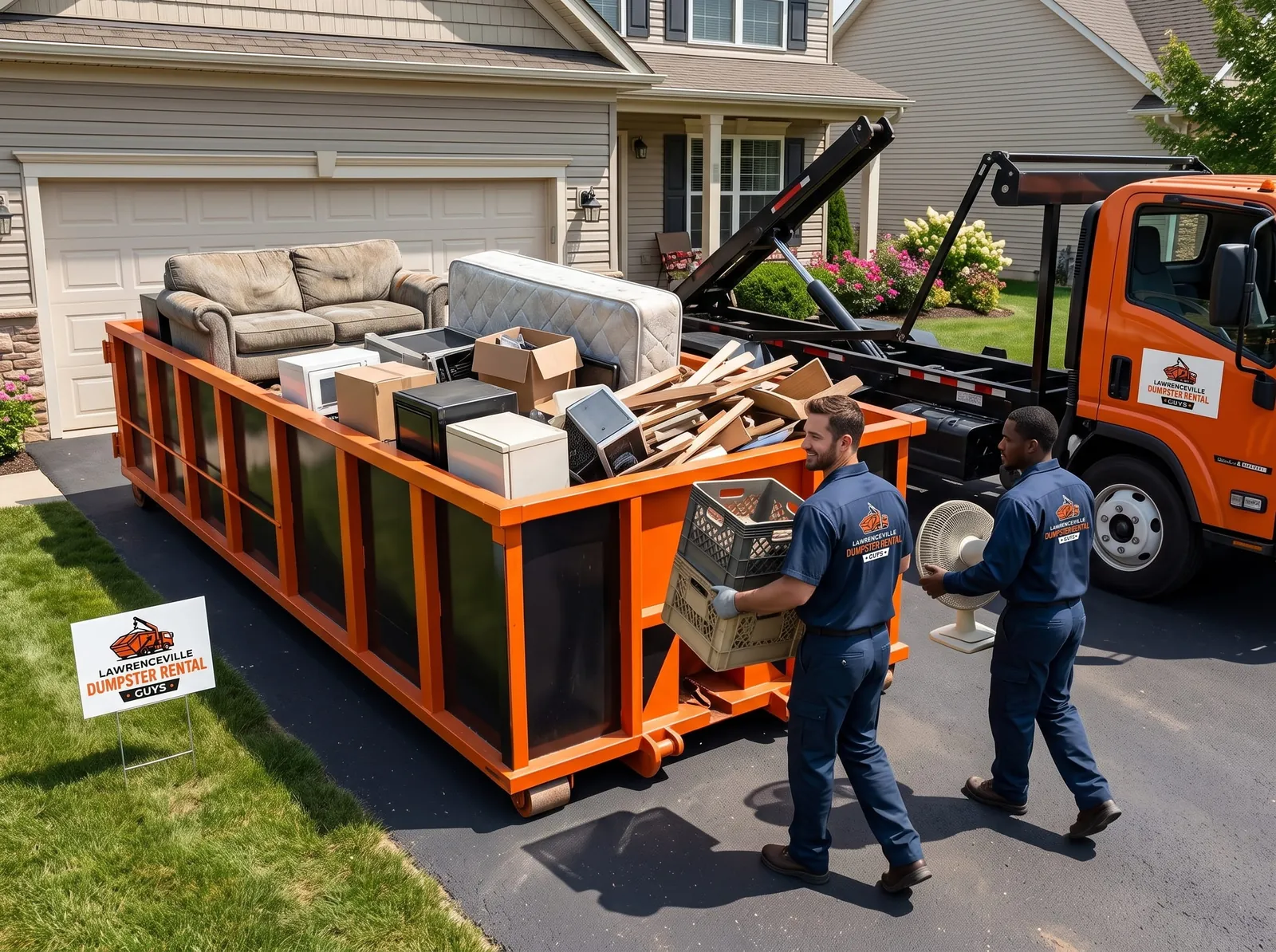
Whole-home cleanout or estate cleanout: A 20-yard is the go-to. Household junk is bulky but light, so you get a lot of room without weight worries. For a truly packed house, a 30-yard may be the smarter single-container play. Our estate cleanout guide has more.
Roof tear-off: Shingles are heavy. For an average single-layer roof on a typical home, a 20-yard with an appropriate weight allowance works, but multiple layers or a large roof may need careful weight planning — this is one to talk through with us.
Flooring or carpet tear-out (multiple rooms): A 15-yard handles most whole-house flooring jobs. Tile adds weight, so factor that in.
Deck removal: A 15-yard fits most residential decks. Larger multi-level decks may push toward a 20.
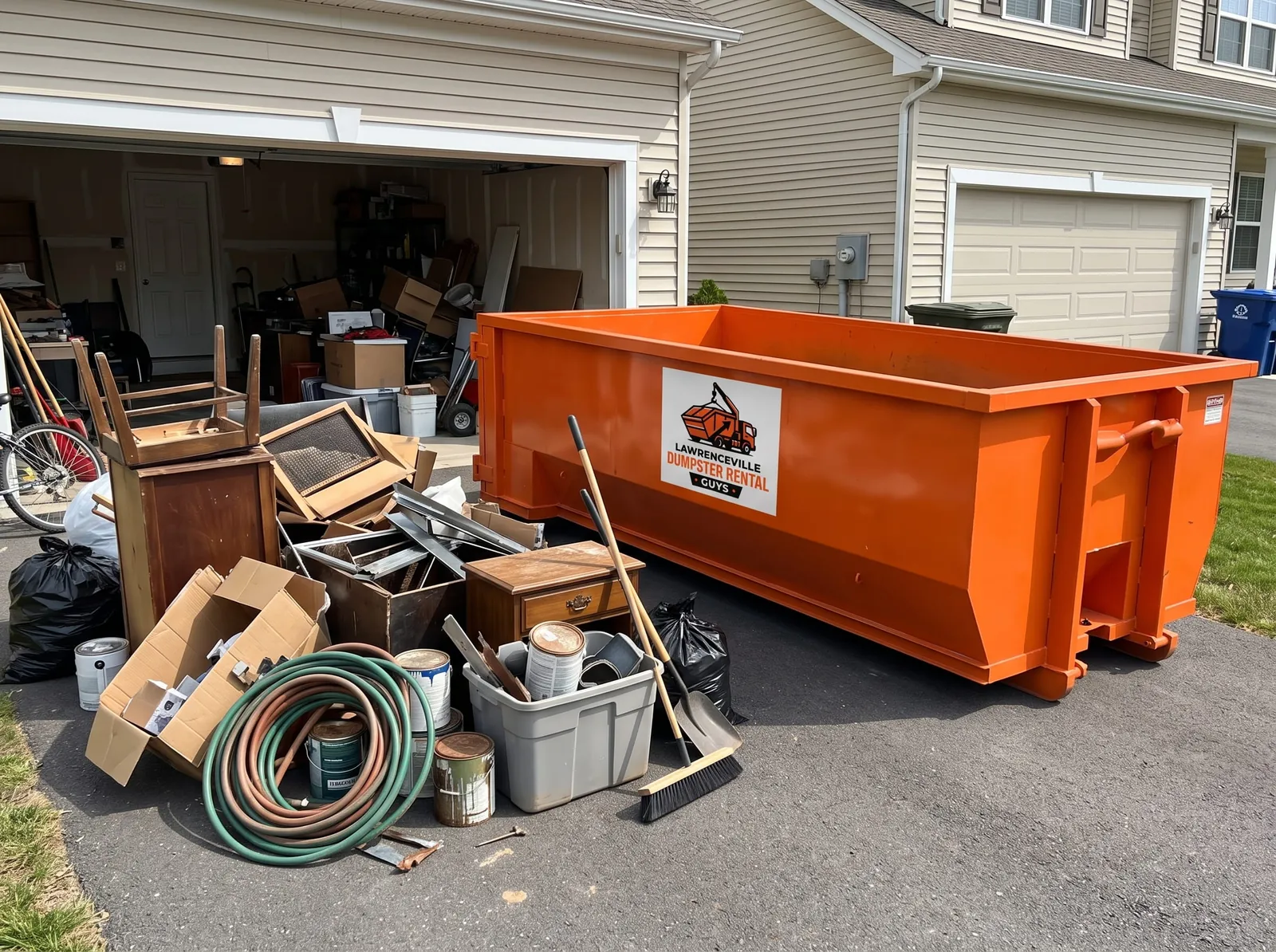
Garage, basement or attic cleanout: A 10 or 15-yard depending on how full the space is.
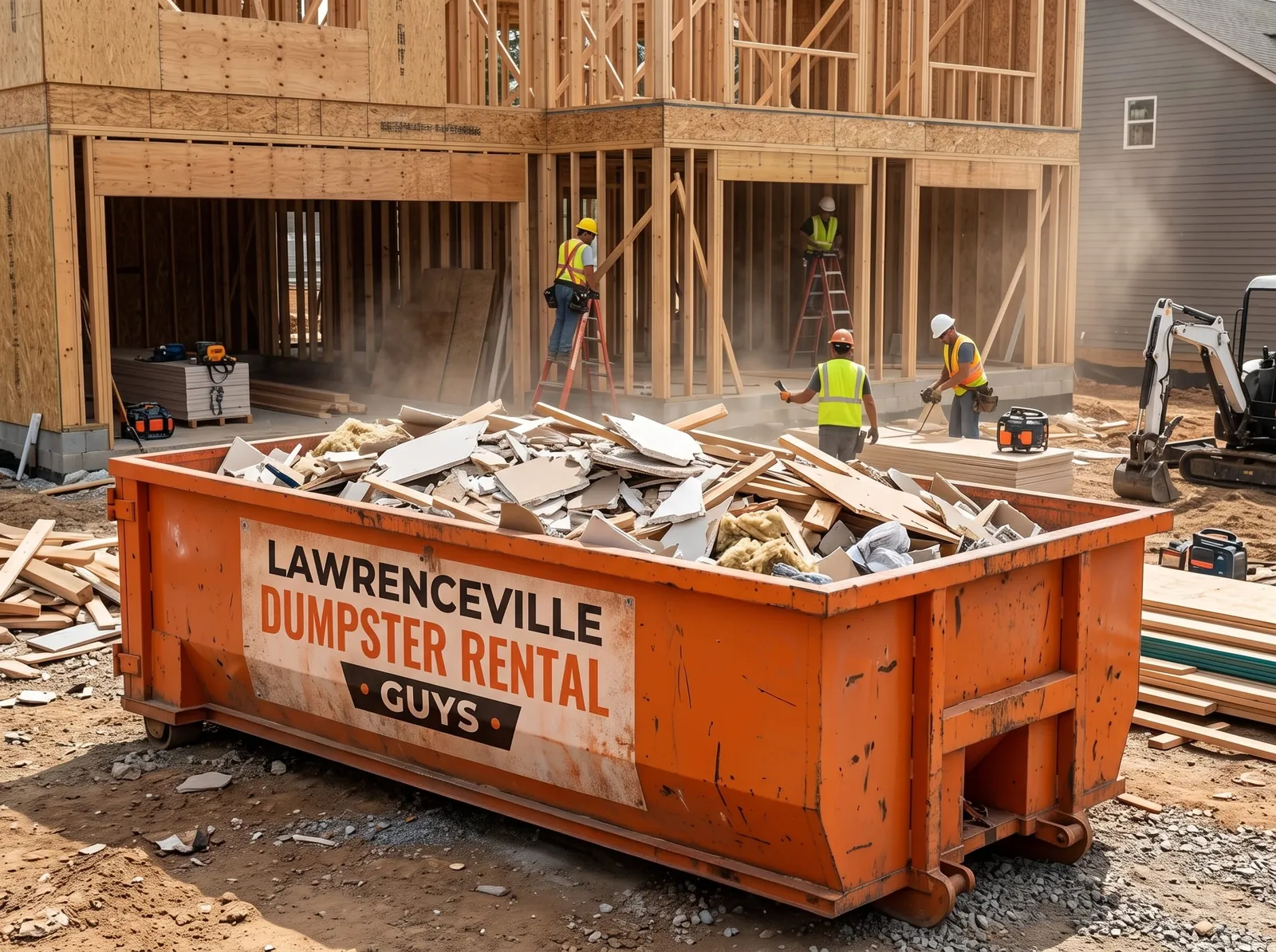
Major renovation, addition or new construction: A 30 or 40-yard keeps a big job moving without constant swaps. See our construction rental page.
The Heavy-Debris Exception You Can't Ignore
If your debris is mostly concrete, brick, dirt, gravel, tile or asphalt, throw the volume chart out the window. These materials are so dense that a 10-yard container full of concrete can already exceed what a truck can legally and safely haul.
For pure heavy debris, we almost always recommend a dedicated 10-yard container and we'll set the right weight allowance. Never fill a 30 or 40-yard box with concrete — it can't be lifted, it can't be transported, and it turns a simple job into a problem. When you tell us your debris type up front, we steer you clear of this trap automatically.
Three Sizing Mistakes That Cost Real Money
1. Ordering too small to 'save money.' The most expensive dumpster is the one that fills up at 70% of the way through your project. Now you're paying for a swap or a second delivery — almost always more than if you'd sized up once. When you're genuinely between two sizes and the debris isn't heavy, go bigger.
2. Ignoring weight. A 40-yard sounds like a bargain until you fill it with wet drywall and dirt and blow past the weight allowance. Match the container to the material, not just the pile size.
3. Guessing alone. You size one or two dumpsters a decade. We size dozens a week. A two-minute phone call almost always beats a solo guess — and it's free.
How to Estimate Volume Without a Math Degree
You don't need to calculate cubic yards precisely — you just need a mental model. The easiest one is the pickup truck. A standard full-size pickup bed, loaded level, holds roughly two to three cubic yards. So picture how many truckloads your debris would fill, then match it to the chart: three loads is a 10-yard, six is a 20-yard, and so on.
Another approach is the 'wall' method for renovation debris. Ripping out a standard 10-by-12 room's worth of drywall, flooring and trim typically produces two to three cubic yards once it's broken down and loaded efficiently. Multiply by the number of rooms and you're in the right ballpark. Add a cushion for the awkward stuff — cabinets, doors, bulky fixtures — that never packs as tightly as you hope.
And remember: these are estimates. The margin for error is exactly why we'd rather you call than agonize over the math. But having a rough number in mind makes that call faster and more accurate.
Local Considerations for Lawrenceville & Gwinnett Homes
Sizing isn't only about debris — it's also about where the container will live for a few days. A few things we see constantly in Gwinnett:
Driveway length and slope. Many Lawrenceville and Snellville homes from the '80s and '90s have shorter or sloped driveways. A 10 or 20-yard almost always fits, but a 30 or 40-yard needs more room and a level-ish spot. If your driveway is tight, tell us and we'll plan placement.
Tree canopy. Our older, tree-lined neighborhoods — think Lilburn's Old Town or established Duluth streets — often have low branches. The delivery truck needs vertical clearance to raise and set the container, so a heavily shaded driveway may call for a different spot.
HOA rules. Plenty of local subdivisions cap how long a dumpster can sit or where it can go. That can influence whether you want one slightly larger container for a short window versus a smaller one for longer. We work within HOA rules all the time and can help you plan around them.
How We Size It For You in Two Minutes
Here's the honest truth: you don't have to figure this out perfectly on your own. When you call Lawrenceville Dumpster Rental Guys, we'll ask a few quick questions — what's the project, roughly how big, what kind of debris — and give you a confident recommendation plus a flat, all-in price. We'd genuinely rather talk you into the right size than sell you a bigger one you don't need. That's how we've built a business on repeat customers and referrals.
So use this guide to get oriented, form a rough estimate, and then let us confirm it. Between your knowledge of the project and our experience sizing thousands of them, you'll land on the right container the first time — no second delivery, no wasted space, no surprises.