It's a smart question to ask before your rental arrives, because getting it wrong can mean a fine or a hassle you didn't budget for. The good news is that for most Lawrenceville homeowners, the answer is simple. Here's the full picture on dumpster permits, placement and the local rules that matter.
In this guide
The Short Answer
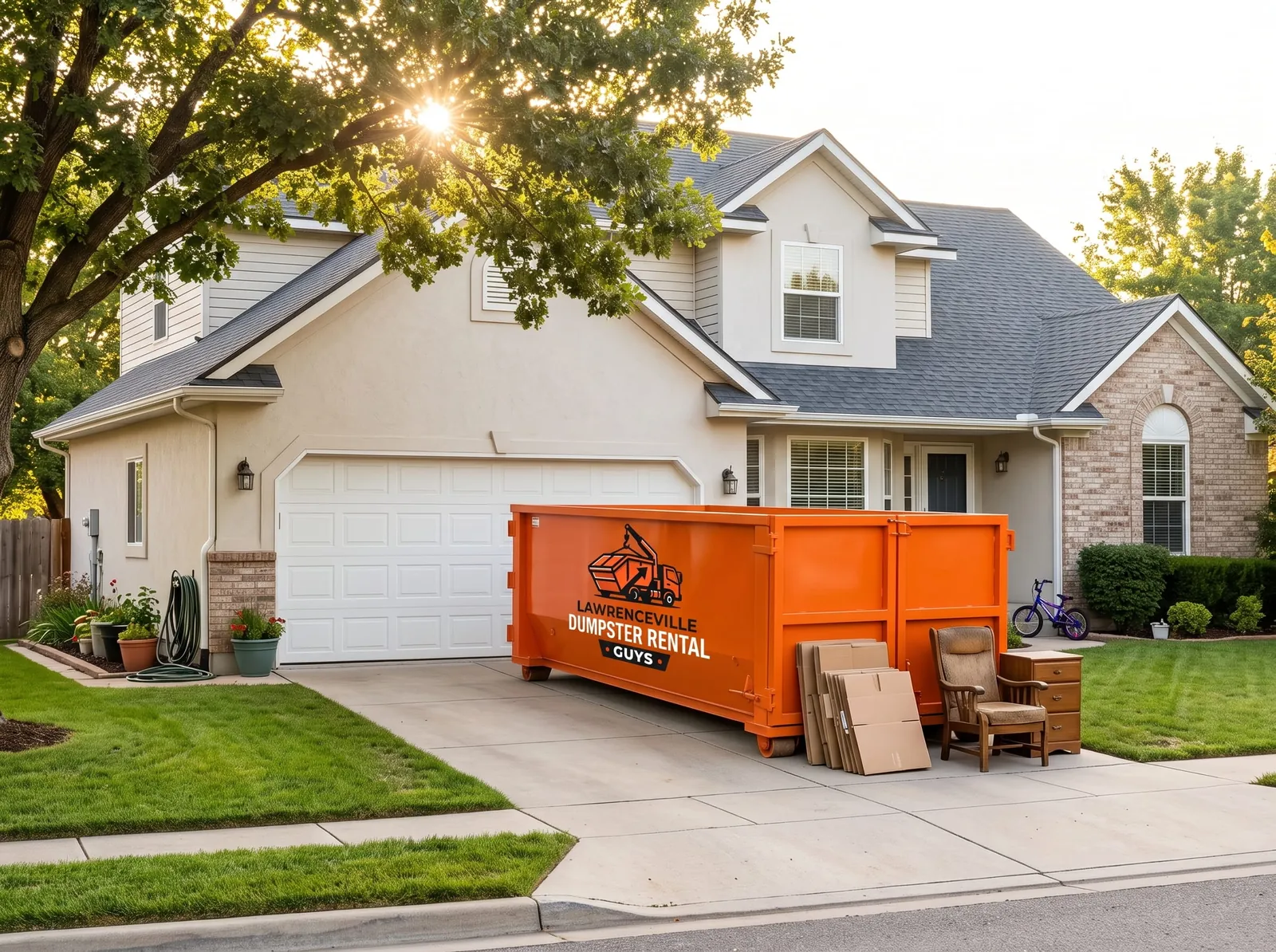
If your dumpster sits entirely on your own private property — your driveway or your land — you generally do not need a permit. The overwhelming majority of residential rentals fall into this category, which is why most of our customers never think about permits at all.
If the dumpster has to be placed on a public street, sidewalk, or right-of-way, you typically do need a permit from the city or county. That's the one situation to plan for.
When You DON'T Need a Permit
You're almost always in the clear when the container is fully on your property:
- On your driveway (the most common placement by far)
- On a private parking pad or hardstand
- On your lawn or an open area of your lot (we'll use boards to protect the surface)
As long as the whole container — and the truck's access to it — stays on private property and doesn't block a sidewalk or roadway, no permit is generally required. This is why we always try to place on the driveway first.
When You DO Need a Permit
A permit generally comes into play when the container must occupy public space:
- Placement on a public street or in a travel/parking lane
- Placement on a public sidewalk or the right-of-way strip between the sidewalk and street
- Certain situations in denser or historic areas with limited private space
This usually applies to tight downtown lots, some townhome and condo setups, or jobs where the driveway simply can't accommodate the container. In those cases, a right-of-way or obstruction permit from the local authority keeps everything above board.
The reason these placements are regulated is straightforward: a container in the roadway affects traffic flow, sightlines, drainage and emergency access, so the city wants it documented, properly marked and time-limited. It's not about making your project harder — it's about keeping public space safe and usable while your dumpster is there. Understanding that makes the small amount of paperwork feel a lot less arbitrary.
How to Get a Permit (If You Need One)
If a street placement is unavoidable, the process is straightforward but does take a little lead time. You'll typically apply through the City of Lawrenceville if you're inside city limits, or through Gwinnett County if you're in an unincorporated area, usually via the public works or permitting department. Requirements, fees and processing times change from time to time, so we recommend confirming the current details directly with the City of Lawrenceville or Gwinnett County before you book. We're happy to point you in the right direction and time the delivery around your permit.
Don't Forget Your HOA
Even when the city doesn't require a permit, your homeowners association might have its own rules about how long a dumpster can stay, where it can sit, and whether you need to notify them first. Many Gwinnett neighborhoods have these guidelines. A quick check of your HOA covenants — or a courtesy note to your board — can save you a violation letter. We serve plenty of HOA communities and are used to working within their requirements.
Placement Best Practices
Wherever your container goes, good placement protects your property and keeps things smooth:
- Choose a firm, level spot — a driveway is ideal.
- We'll put boards down to protect concrete, pavers and asphalt from scratches and staining.
- Clear overhead obstructions — the truck needs vertical clearance to raise and lower the box (watch for low branches and wires).
- Keep a clear approach so the delivery truck has a straight, unobstructed path.
- Mind property lines and drainage so you're not encroaching on a neighbor or blocking runoff.
Special Situations: Townhomes, Corner Lots & Historic Areas
Some properties make placement trickier, and those are exactly the ones where permits come up. Townhomes and condos often share driveways or have no private hardstand at all, which can force a street placement and a right-of-way permit — plus an HOA sign-off. Corner lots sometimes have limited private frontage and sightline rules to consider. And in older or historic pockets near downtown Lawrenceville, narrow lots and tighter streets can mean the only workable spot is public. If you live in one of these, plan a little extra lead time and call us early; we'll figure out the cleanest legal placement together.
A Quick Pre-Delivery Checklist
Run through this before your container arrives and delivery day will go smoothly:
- Decide on a spot — driveway first, to avoid needing a permit at all.
- Move vehicles and clear the approach so the truck has a straight, unobstructed path.
- Check overhead for low branches and wires where the container will be set.
- Confirm the spot is firm and reasonably level.
- If a street placement is unavoidable, verify permit requirements with the city or county first.
- Check your HOA rules on placement and duration.
- Note property lines so you're not encroaching on a neighbor.
Five minutes here prevents almost every delivery-day hiccup.
What Happens If You Skip a Required Permit
Placing a dumpster in the public right-of-way without a required permit can lead to fines, a citation, or an order to remove it — an easily avoided headache. When in doubt, keep it on the driveway (no permit needed) or take five minutes to confirm requirements with the city. And of course, just call us — after more than a decade delivering across Lawrenceville and Gwinnett, we can usually tell you what your address needs.